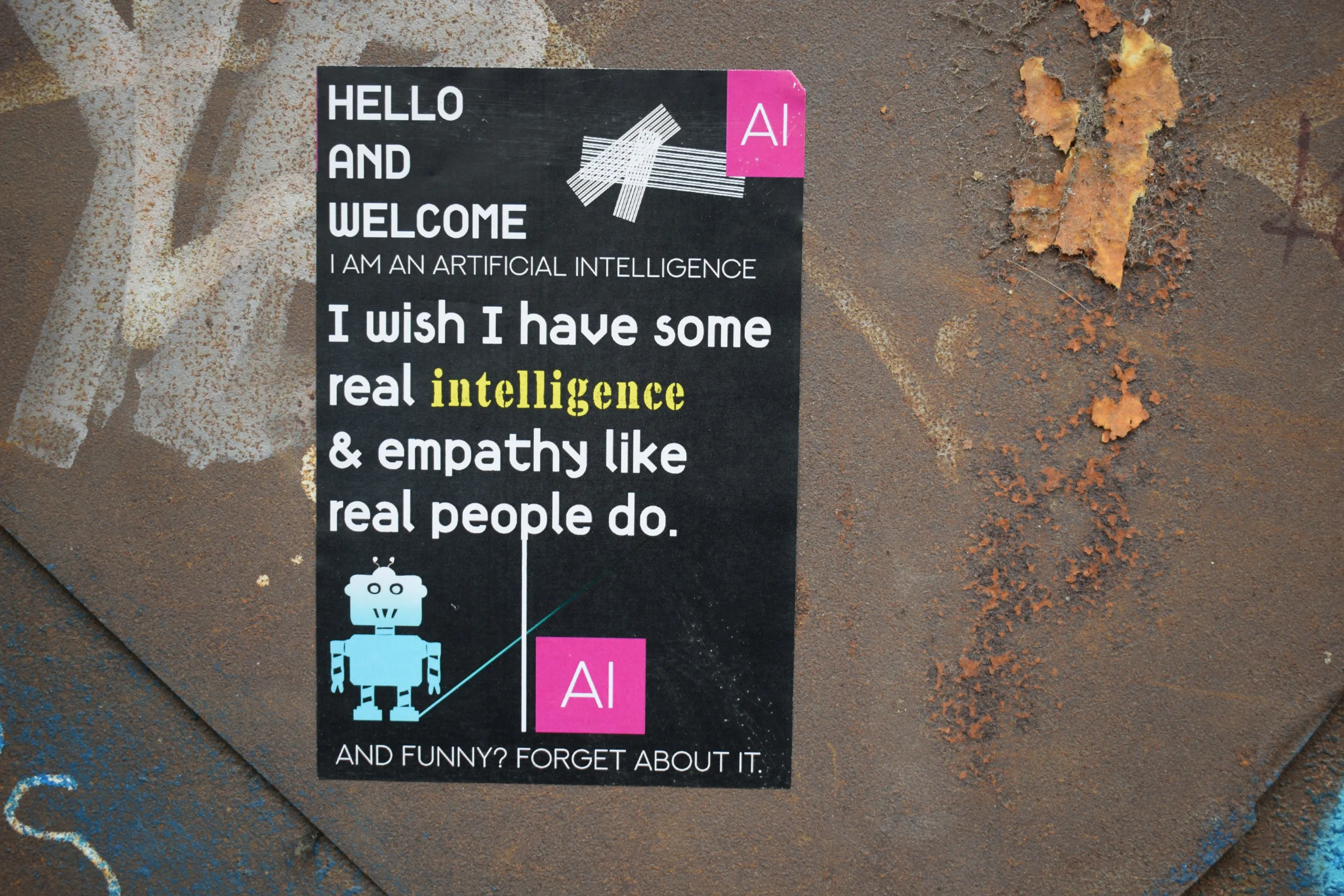
The Difference Between Mass AI Content and Luxury Editorial Content
May 31, 2026

The core difference between mass AI content and luxury editorial content boils down to intent and execution. Mass AI content aims for volume and basic information dissemination, often prioritizing keywords and a quick turnaround. Luxury editorial content, on the other hand, is crafted with meticulous care, focusing on unique perspectives, deep insights, and a polished, distinctive voice. It’s about providing an experience and value that goes beyond mere information. Think of it like comparing a fast-food burger to a gourmet meal; both feed you, but one offers a significantly elevated experience.
Understanding the origin of content is crucial to grasping its fundamental nature. This isn’t just about who types the words, but the underlying motivation and resources behind its creation.
AI’s Algorithmic Origin
Mass AI content is born from algorithms. These sophisticated programs scour vast datasets of existing text, identify patterns, and then reassemble information based on prompts and predetermined objectives. The goal is often efficiency and scale.
- Pattern Recognition & Repetition: AI excels at identifying common phrases, sentence structures, and factual statements. It can then reproduce these in new combinations, often leading to a sense of familiarity but rarely true originality.
- Prompt Engineering is Key: The quality of the AI output is heavily dependent on the quality and specificity of the prompt given by a human. A vague prompt will yield generic results, while a highly detailed prompt can coax more nuanced content, but it still operates within the confines of its training data.
- Data Dependence: AI content is only as good as the data it’s trained on. If the data is biased, outdated, or superficial, the AI’s output will reflect these limitations. It doesn’t “think” or “research” in the human sense.
Human Craftsmanship in Editorial
Luxury editorial content originates from human intellect, creativity, and expertise. It’s the product of thought, extensive research, and a deliberate effort to craft something unique and valuable.
- Expert Knowledge & Experience: Editors and writers bring years of experience, specialized knowledge, and a deep understanding of their subject matter. This allows for nuanced perspectives and authoritative insights that AI cannot spontaneously generate.
- Original Thought & Analysis: True editorial content involves critical thinking, analysis, and the formation of new ideas or interpretations. It’s not just about recombining existing information but adding a fresh lens.
- Dedicated Research & Sourcing: Human writers can conduct interviews, explore obscure sources, and synthesize information from disparate fields, resulting in a richness and depth that AI struggle to replicate directly.
The Voice and Tone: Speaking to an Audience
The way content “speaks” to its audience is a prime differentiator. This isn’t just about grammar, but the subtle nuances that convey personality, authority, and connection.
AI’s Neutral, Often Generic Tone
AI content tends to adopt a neutral, factual, and often somewhat generic tone. While it can be programmed to mimic certain styles, it often lacks genuine personality or the ability to truly adapt to complex emotional contexts.
- Informative but Impersonal: The primary aim is to convey information efficiently. While accurate, it often comes across as detached or lacking a personal touch.
- Repetitive Phrasing: Due to its reliance on patterns, AI can sometimes repeat certain phrases or sentence structures, leading to a monotonous reading experience over time.
- Limited Emotional Range: AI struggles with expressing genuine empathy, humor, or sarcasm in a natural, consistent way, often missing the subtle cues that humans use.
Editorial’s Distinctive, Engaging Voice
Luxury editorial content cultivates a distinct and engaging voice. This voice is often a reflection of the publication’s brand, the writer’s personality, and a deliberate strategy to connect with a specific readership.
- Authoritative Yet Approachable: It establishes a sense of expertise and trustworthiness without being overly academic or stuffy. It invites engagement rather than simply presenting facts.
- Nuance and Subtlety: Human writers can employ irony, metaphor, and subtle humor to make a point, adding layers of meaning that a direct AI approach often misses.
- Emotional Resonance: Editorial content can evoke emotions, tell compelling stories, and resonate with readers on a deeper level, building a stronger connection than purely factual prose.
Depth and Nuance: Beyond the Surface Level
This is perhaps the most significant distinction. Mass AI content often scratches the surface, while luxury editorial content delves deep, providing context, insight, and a richer understanding.
AI’s Broad Strokes and Summaries
AI is excellent at summarizing existing information and providing a general overview. It’s designed for efficiency, not necessarily profound understanding.
- Surface-Level Explanations: It can define terms, list characteristics, and explain basic concepts, but it often stops short of exploring complexities or underlying implications.
- Lack of Critical Analysis: AI cannot genuinely analyze conflicting viewpoints, offer original critiques, or synthesize disparate ideas into a novel conclusion that hasn’t been widely discussed.
- Generic Examples: While it can generate examples, they often lack the specificity or creativity that makes them truly illuminating or memorable.
Editorial’s In-Depth Exploration
Luxury editorial content is characterized by its depth and nuance. It aims to provide a comprehensive understanding, offering fresh perspectives and challenging conventional wisdom.
- Contextualization and Backstory: It provides the necessary background and historical context, allowing readers to fully grasp the significance of the information presented.
- Expert Commentary and Analysis: Human experts can offer unique insights, predictions, and a critical evaluation of trends or developments, going beyond what’s widely reported.
- Original Case Studies & Examples: Writers can research and present specific, real-world examples that illustrate complex points in a compelling and memorable way, often involving firsthand accounts or exclusive data.


Purpose and Value Proposition: Why Does This Content Exist?
The underlying purpose behind content creation dictates its form and ultimate value. Understanding this helps clarify why these two types of content serve different needs.
AI’s Utility: Volume, SEO, and Efficiency
Mass AI content primarily serves practical, functional purposes. It’s about efficiently generating a large volume of content that addresses common search queries or fills content gaps.
- SEO Optimization: A big driver for AI content is to rank for specific keywords, driving traffic to a website. The focus is often on satisfying algorithmic requirements rather than profound human connection.
- Information Dissemination: It’s useful for quickly providing basic information, FAQs, product descriptions, or summaries where originality and deep insight aren’t the primary concerns.
- Cost-Effectiveness at Scale: Generating AI content is significantly cheaper and faster than human-created content, making it attractive for organizations needing high volume on a tight budget.
Editorial’s Intrinsic Value: Thought Leadership, Trust, and Engagement
Luxury editorial content aims for a higher purpose: to establish thought leadership, build trust, and deeply engage an audience. It’s an investment in brand reputation and community building.
- Establishing Authority and Trust: High-quality editorial content positions a brand or publication as a credible, authoritative source, fostering trust among its readership.
- Fostering Community and Engagement: Content that provokes thought, tells compelling stories, or offers unique insights encourages discussion, sharing, and a deeper connection with the audience.
- Brand Building and Differentiation: In a crowded content landscape, distinctive editorial content allows a brand to stand out, articulate its values, and attract a loyal following based on the quality of its ideas.
The Human Element: Craft vs. Computation
Ultimately, the most significant divergence lies in the presence (or absence) of the human touch. This isn’t just about who wrote the words, but the inherent qualities that human consciousness brings to creation.
AI’s Algorithmic Perfection (and Imperfection)
AI content strives for statistical perfection: correct grammar, logical flow, and factual accuracy as derived from its training data. However, it often misses the nuances that make human communication rich.
- Lack of Intuition and Empathy: AI operates on logic and data. It doesn’t possess intuition, the ability to read between the lines, or genuine empathy, which are crucial for truly impactful writing.
- Inability to Innovate Creatively: While AI can generate novel combinations of words, it doesn’t “invent” truly new concepts or artistic expressions in the way a human can. It remixes, it doesn’t conceive.
- Absence of Personal Experience: AI has no lived experience. It cannot draw on personal anecdotes, observations, or emotional understanding in the way a human writer does to make content relatable and resonant.
Editorial’s Imprint of Humanity
Luxury editorial content bears the unmistakable imprint of human thought, feeling, and ingenuity. It’s this human touch that elevates it from mere information to something truly valuable.
- Personal Perspective and Interpretation: Writers inject their unique viewpoints, interpretations, and even biases (when acknowledged) into the content, making it distinct and engaging.
- Artistry and Craftsmanship: Excellent writing is an art form. It involves choosing the perfect word, crafting elegant sentences, and structuring narratives to maximize impact – skills that go beyond algorithms.
- The Power of Storytelling: Humans are natural storytellers. Editorial content leverages this, weaving narratives, character arcs, and emotional hooks that captivate readers in a way that purely factual AI content rarely can.
- Ethical Considerations and Accountability: Human editors and writers take responsibility for the accuracy, fairness, and ethical implications of their work, a level of accountability that AI cannot yet hold.
In conclusion, while mass AI content has a valuable role to play in efficient information delivery and SEO, it operates on a different plane than luxury editorial content. The latter, with its human-driven depth, distinctive voice, and commitment to original thought, offers a richness and intrinsic value that AI is not designed to replicate. The choice between them isn’t about one being “better” in all contexts, but about understanding their distinct purposes and capabilities.