How to Maintain Editorial Quality With AI Workflows
May 31, 2026

AI tools can be a game-changer for content creation, but they don’t automatically guarantee high-quality outputs. In fact, if not managed carefully, AI can actually introduce new challenges to your editorial standards. The key to maintaining editorial quality with AI workflows lies in strategic integration, robust human oversight, and a clear understanding of AI’s strengths and weaknesses. It’s not about letting AI take over, but rather leveraging it to enhance and streamline your existing processes, freeing up your human talent for more nuanced, creative, and critical tasks. Think of AI as a powerful assistant, not a replacement for your editorial judgment.
Before we dive into maintenance, it’s crucial to properly frame what AI can and cannot do within an editorial context. It’s powerful, yes, but it’s still a tool, and like any tool, its effectiveness depends entirely on how skillfully it’s wielded.
AI as an Efficiency Multiplier
AI excels at taking on repetitive, process-driven tasks. This is where you see the biggest immediate gains in efficiency. Imagine the sheer volume of content modern businesses need to produce – from blog posts and social media updates to ad copy and email newsletters. Manually handling every single step can become a bottleneck.
AI can significantly speed up preliminary research by sifting through vast amounts of data to extract key facts or identify trends. It can generate first drafts of various content types surprisingly quickly, providing a foundation for human editors to build upon. This saves countless hours that would otherwise be spent staring at a blank page. For example, drafting product descriptions or summarizing lengthy reports are tasks AI can handle with impressive speed. This isn’t about perfectly polished final content, but rather about rapidly producing a coherent starting point, allowing your human team to focus on refinement.
AI’s Limitations and Potential Pitfalls
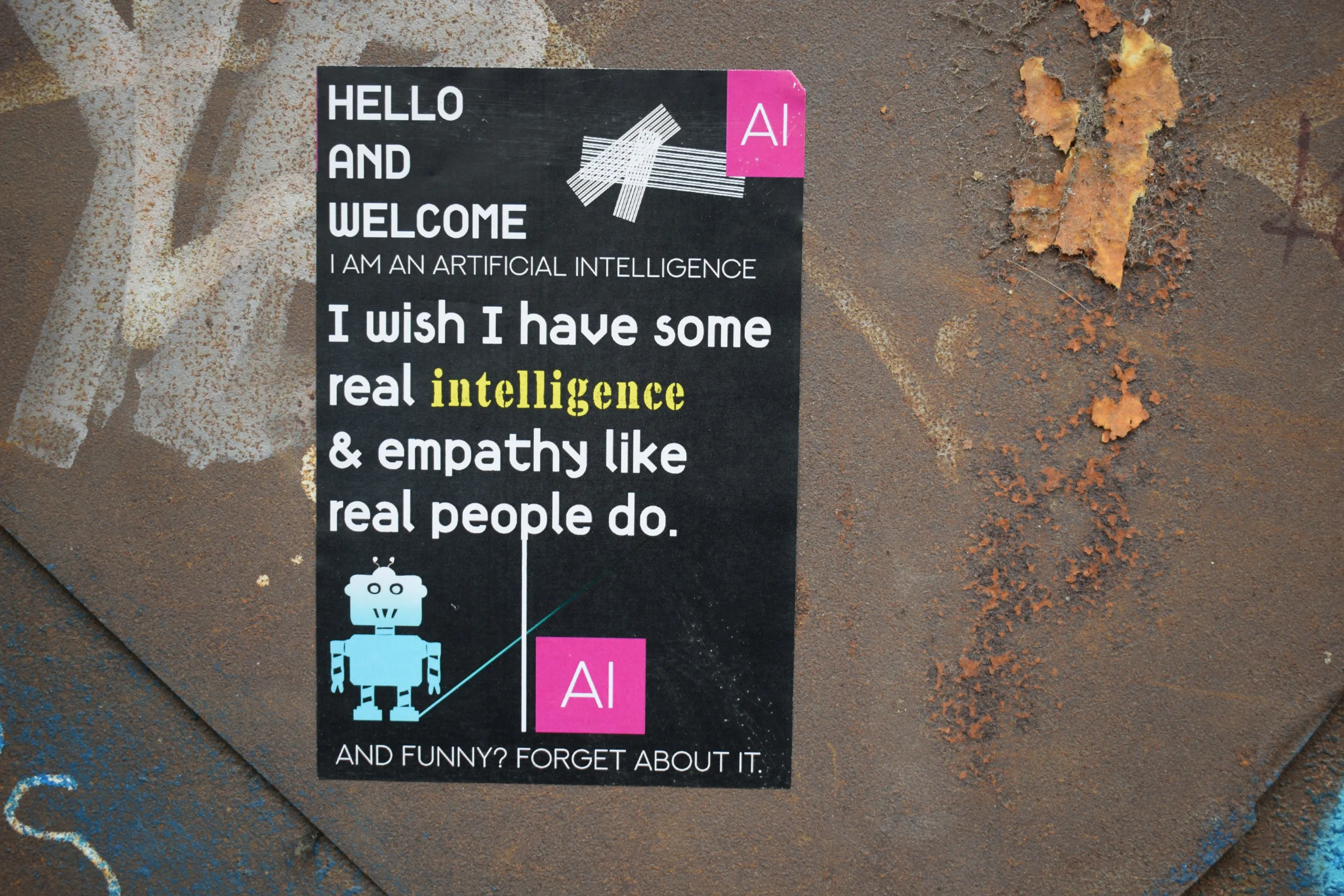
While AI can be incredibly helpful, it’s far from perfect. It lacks true understanding, empathy, and lived experience. It doesn’t inherently grasp nuance, cultural context, or the subtle intentions behind human communication. This means AI-generated content can often sound generic, superficial, or even unintentionally misleading.
- Lack of Originality: AI algorithms are trained on existing data. This means their outputs are, by definition, derivative. They can synthesize information in new ways, but they don’t invent truly novel concepts or perspectives. This can lead to content that lacks a unique voice or fresh insights. If you’re aiming for content that truly stands out, AI drafts will almost always need a significant human touch to inject originality.
- Factual Inaccuracies and Hallucinations: AI can sometimes “hallucinate,” meaning it generates confident-sounding information that is completely false or unsubstantiated. This is a severe risk in editorial workflows where factual accuracy is paramount. Editors must assume that any AI-generated fact needs independent verification. Relying solely on AI for facts is a recipe for disaster.
- Bias Reinforcement: AI models learn from the data they are fed. If that data contains biases (which most human-generated data does), the AI will inevitably reflect and even amplify those biases in its outputs. This can lead to content that is discriminatory, unfair, or misrepresentative, which is a major ethical concern for any reputable publication or brand. Human oversight is critical to identify and correct these embedded biases.
- Stilted or Repetitive Language: While AI can generate grammatically correct sentences, its prose can often lack natural flow, variety, or a distinct tone of voice. It might use repetitive phrasing, awkward constructions, or simply sound “uninspired.” This is where a human editor’s understanding of rhythm, tone, and audience engagement becomes indispensable.
- Ethical and Copyright Concerns: The use of AI raises questions about intellectual property, especially when an AI model is trained on copyrighted material. There are ongoing debates and legal challenges in this area. Furthermore, attributing authorship when AI is involved can be complex. While AI can be a tool, the ultimate responsibility for the content, including its ethical implications, always rests with the human editors and publishers.
Establishing Clear Guidelines and Best Practices
To effectively integrate AI without sacrificing quality, you need a robust framework. This isn’t about guessing; it’s about having clear rules and processes in place.
Defining AI’s Boundaries and Scope
Before any AI tool touches your content, you need to decide precisely where it fits into your workflow. What tasks is it allowed to handle, and what is strictly off-limits?
- Identify Appropriate Tasks: Begin by creating a list of content-related tasks. For each task, assess whether AI is genuinely suitable. Good candidates often include:
- Initial brainstorming/idea generation: AI can suggest topics or angles.
- Outline creation: AI can structure content around a given prompt.
- First draft generation: For routine content like product descriptions, social media captions, or basic news summaries.
- Content repurposing: Converting a blog post into social media snippets or email copy.
- Grammar and spelling checks (as a first pass): Though human editors should always do the final check.
- Keyword research assistance: Suggesting relevant terms.
- Establish “No-Go” Zones: Equally important is identifying areas where AI should not be used without heavy human intervention or at all. These typically include:
- Sensitive topics: AI may lack the nuance or empathy required for topics involving health, politics, personal finance, or social justice.
- Original investigative journalism: Where factual accuracy, sourcing, and ethical reporting are paramount.
- Opinion pieces and thought leadership: Which require a unique human perspective and voice.
- Highly creative or emotionally driven content: Such as poetry, complex storytelling, or deeply personal narratives.
- Legal or medical advice: Where accuracy is critical and malpractice risks are high.
- Document Usage Policies: Write down these guidelines. Create a living document that outlines exactly how AI tools are to be used, by whom, and for what purpose. This provides clarity and consistency across your team. Include examples of good and bad AI prompts, and what constitutes acceptable AI output.
Crafting Effective AI Prompts
The quality of AI output is directly proportional to the quality of the input. Poorly crafted prompts will lead to poor results. This is often an overlooked aspect of AI integration.
- Be Specific and Detailed: Don’t just say “write a blog post.” Instead, tell the AI:
- Target audience: Who are you writing for? (e.g., “small business owners,” “teenagers interested in gaming”)
- Desired tone: (e.g., “friendly and conversational,” “authoritative and formal,” “humorous”)
- Key message/angle: What is the core takeaway?
- Key points/arguments to include: Provide bullet points or a mini-outline.
- Length requirements: (e.g., “around 800 words,” “a short paragraph”)
- Keywords to incorporate: If relevant for SEO.
- Call to action (CTA): What should the reader do next?
- Desired format: (e.g., “blog post with headings,” “social media post with hashtags”)
- Provide Examples (Few-Shot Prompting): If you have examples of content that reflects your brand’s voice or desired style, include them in your prompt. For instance, “Here are three examples of our previous blog posts; write a new one in a similar style.” This helps the AI understand the nuances of your brand’s aesthetic.
- Iterate and Refine: Treat prompt engineering as an ongoing process. If the AI output isn’t quite right, don’t just accept it. Modify your prompt. Add more constraints, provide more context, or guide it more explicitly. It’s often a back-and-forth conversation. Keep a record of successful prompts for future use.
- Consider Model-Specific Quirks: Different AI models (ChatGPT, Claude, Gemini, etc.) have different strengths and weaknesses. Some might be better at creative writing, others at summarization. Experiment to find out which model performs best for specific tasks within your workflow.
Implementing Robust Human Oversight
Human oversight isn’t just a recommendation; it’s the bedrock of maintaining editorial quality with AI. Think of AI as a skilled intern who needs constant supervision and final approval from a seasoned editor.
The Essential Human Editor
The role of the human editor becomes even more critical, shifting from primary content creator to a content curator, refiner, and quality controller.
- Fact-Checking and Verification: This is non-negotiable. Every single fact, statistic, or claim generated by AI must be independently verified against reliable sources. Assume AI-generated facts are potentially incorrect until proven otherwise. This requires access to credible databases, academic journals, expert interviews, and primary sources.
- Tone, Voice, and Brand Consistency: AI often struggles with maintaining a consistent brand voice or achieving a specific emotional tone. Human editors must review AI-generated content to ensure it aligns perfectly with your brand’s established identity, values, and communication style. They imbue the content with the unique personality that AI cannot replicate.
- Adding Nuance and Context: The AI can present information, but it can’t always provide the deeper context, the “why,” or the subtle implications that human authors can. Editors add the layers of meaning, interpret complex ideas, and address potential ambiguities that AI might overlook. This includes understanding the target audience’s specific needs and tailoring the message accordingly.
- Originality and Creativity Infusion: AI-generated content often sounds generic. Human editors are responsible for adding original insights, creative flair, unique metaphors, compelling storytelling, and fresh perspectives that elevate the content beyond mere information regurgitation. They transform competent drafts into captivating pieces.
- Ethical Review: Editors must scrutinize AI outputs for any signs of bias (racial, gender, cultural, etc.), misrepresentation, or ethical issues. They ensure the content is fair, inclusive, and adheres to ethical journalistic or brand communication standards. This includes being mindful of privacy concerns and avoiding inflammatory language.
A Multi-Stage Review Process
Don’t rely on a single human check. A multi-stage review process builds in redundancy and ensures comprehensive quality assurance.
- Initial AI Output Review: The first human touchpoint should be with the person who generated the AI draft. This individual should quickly assess if the output meets the basic requirements of the prompt and if there are any glaring issues.
- Subject Matter Expert (SME) Review: If the content is technical or involves specialized knowledge, it should go to a Subject Matter Expert before a full editorial pass. The SME’s role is to ensure factual accuracy, technical correctness, and industry relevance. They are the gatekeepers of truth in their domain.
- Editorial Deep Dive: This is where the primary editor takes over. They focus on overall quality – grammar, style, flow, tone, brand voice, logical coherence, and engaging storytelling. They refine sentences, restructure paragraphs, and ensure the content flows seamlessly from beginning to end. This is where most of the human polish happens.
- Proofreading/Final Review: A fresh pair of eyes (ideally someone who hasn’t been heavily involved in the previous stages) performs a final proofread. This person looks for lingering typos, grammatical errors, formatting inconsistencies, or any last-minute issues that might have slipped through. This final check is crucial before publication.


Iterating and Refining AI Workflows
AI isn’t a “set it and forget it” tool. Its effectiveness within your editorial process will evolve, and so too must your approach. Regular evaluation and refinement are key to continuous improvement.
Data-Driven Assessment of AI Performance
You can’t improve what you don’t measure. Collect data on how AI is performing within your workflows.
- Track Efficiency Gains: Monitor how much time AI saves your team on specific tasks. For example, compare the time it takes to produce a first draft manually versus using AI and then editing it. Quantify the reduction in time spent on research, outlining, or basic writing.
- Measure Quality Metrics: This can be trickier, but it’s essential.
- Error rates: Keep a log of factual inaccuracies, grammatical errors, or stylistic inconsistencies introduced by AI. Categorize these errors to identify patterns.
- Revision time: How much time do human editors spend correcting, refining, and adding value to AI-generated drafts compared to human-generated ones? If AI drafts consistently require massive rewrites, its utility might be limited for that specific task.
- Audience engagement: If applicable, track reader feedback, comments, or engagement metrics for content where AI played a significant role. This can provide qualitative insights into how well the content resonates.
- Gather Team Feedback: Regularly survey your team members who interact with AI tools. Ask them:
- What are their biggest frustrations with AI outputs?
- Where do they see AI adding the most value?
- What suggestions do they have for improving prompts or integration?
- Are there tasks where AI is hindering rather than helping? This qualitative feedback is just as important as quantitative data.
Adapting Prompts and Processes
The insights gained from your assessment should directly inform how you improve. This isn’t a static system; it’s dynamic.
- Refine Prompt Library: Based on error patterns and team feedback, update your library of effective AI prompts. Create templates for different content types. If AI frequently hallucinates facts, add a directive to “only state facts that are widely verifiable and cite potential sources if possible.” If the tone is off, include more specific tone modifiers.
- Adjust Workflow Stages: If certain stages consistently show bottlenecks or quality issues related to AI, rethink that part of the workflow. Maybe an additional human review needs to be added for sensitive topics, or perhaps AI should only be used for the very initial brainstorming for highly creative content. You might decide to limit AI to outline generation for complex articles, rather than full first drafts.
- Retrain Your Team: As AI models update and your understanding evolves, provide ongoing training to your team. Teach them advanced prompt engineering techniques, how to identify common AI pitfalls, and best practices for ethical AI use. Make sure everyone understands the updated guidelines and policies.
- Experiment with New Tools/Models: The AI landscape changes rapidly. Stay informed about new tools, models, and features. Periodically experiment with different AI platforms to see if they offer better solutions for specific tasks or overcome current limitations. Don’t be afraid to switch tools if a better one emerges.
The Future of Editorial Quality with AI
AI is not a passing fad; it’s a fundamental shift in content creation. Embracing it strategically, rather than resisting it, is crucial for staying competitive and maintaining high standards.
Investing in Human Expertise
Paradoxically, as AI becomes more sophisticated, the value of uniquely human skills increases.
- Deep Subject Matter Expertise: AI can process information, but it can’t develop the deep, nuanced understanding that comes from years of human study, experience, and critical thinking. Editors with profound knowledge in specific domains will be essential for validating AI outputs and injecting true authority and insight into content.
- Critical Thinking and Ethical Judgment: The ability to question, analyze, and make ethical decisions remains firmly in the human domain. Editors will be the guardians of truth and integrity, responsible for identifying bias, inaccuracy, and misleading information that AI might generate.
- Creativity and Storytelling: While AI can mimic creative styles, it struggles with genuine innovation, emotional resonance, and crafting compelling narratives that truly move an audience. Human storytellers, copywriters, and creative directors will be vital for infusing content with originality and emotional depth.
- Strategic Vision and Empathy: Understanding audience needs, market trends, and developing long-term content strategies requires human empathy and foresight. AI can assist with analysis, but the strategic direction and the human connection that underpins effective communication will always be led by people.
Continuous Adaptation to Evolving AI Capabilities
The pace of AI development is breathtaking. What’s true about AI capabilities today might be outdated in six months.
- Stay Informed: Dedicate resources to staying current with AI advancements. Follow AI research, industry news, and new tool releases. Understand the implications of new models and techniques for your editorial workflows.
- Pilot Programs and Experimentation: Regularly run small-scale pilot programs to test new AI tools or features. Don’t immediately integrate everything, but explore potential benefits cautiously and systematically.
- Develop a Culture of Learning: Foster an organizational culture where continuous learning about AI is encouraged. Offer training, workshops, and opportunities for your team to experiment and share knowledge.
- Flexibility in Workflow Design: Design your editorial workflows with inherent flexibility. Avoid rigid structures that will be difficult to adapt as AI technology evolves. Be prepared to revisit and revise your processes frequently to leverage new AI strengths and mitigate new weaknesses.
Maintaining editorial quality with AI workflows is an ongoing journey, not a destination. It requires thoughtful planning, rigorous oversight, and a commitment to continuous improvement. By understanding AI’s capabilities and limitations, establishing clear guidelines, empowering human editors, and staying adaptable, you can harness the power of AI to create more efficient, robust, and ultimately, higher-quality content. It’s about smart collaboration between human intellect and artificial intelligence, where the human element always retains the final say and the ultimate responsibility for the published word.